Let’s Talk about Revenue Operations

Revenue Operations Model - Customer, Organization, Individual

Revenue operations is a topic that we are seeing come up more and more often. I want to put my thoughts out there.

So we can get started on the right foot, let’s start with a definition.

What is Revenue Operations?

Revenue Operations, often called RevOps, is the active processes and functions used to generate revenue within a business.

Revenue Operations in practical terms refers to the people, process, technology (systems/tools), that you have in your organization that facilitates revenue growth.  This includes demand generation, revenue generation, revenue retention, revenue growth.

Where Most People Start with RevOps

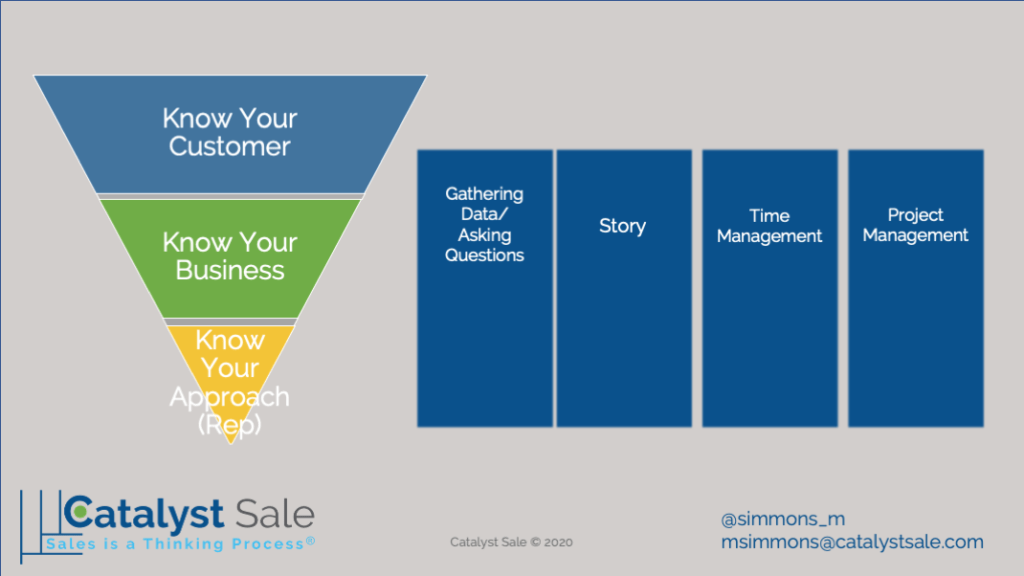
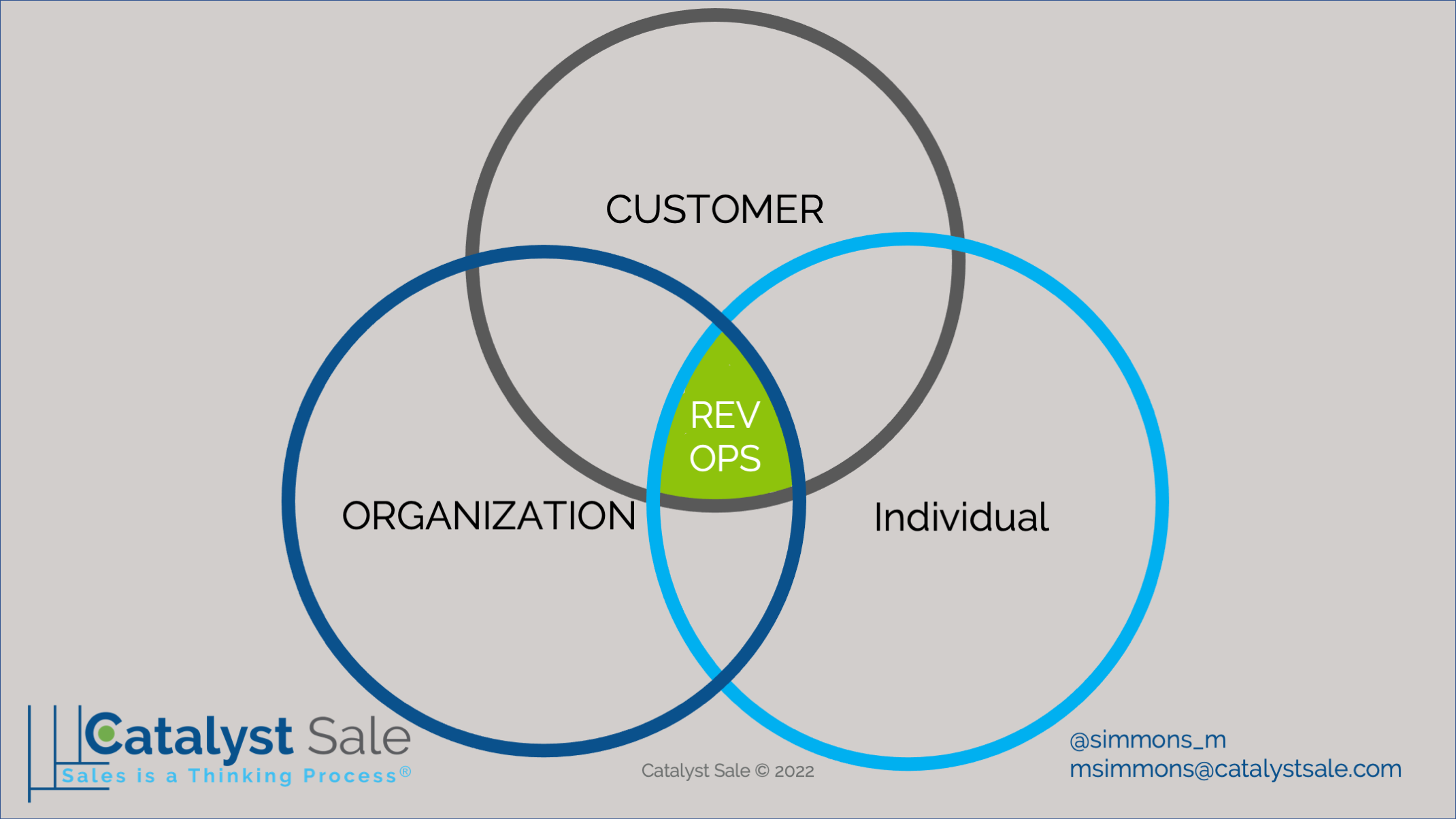
Many organizations attempt to solve this very complex problem through the lens of either the customer, the organization, or the rep. Very few have taken the time to understand this challenge from all three viewpoints.
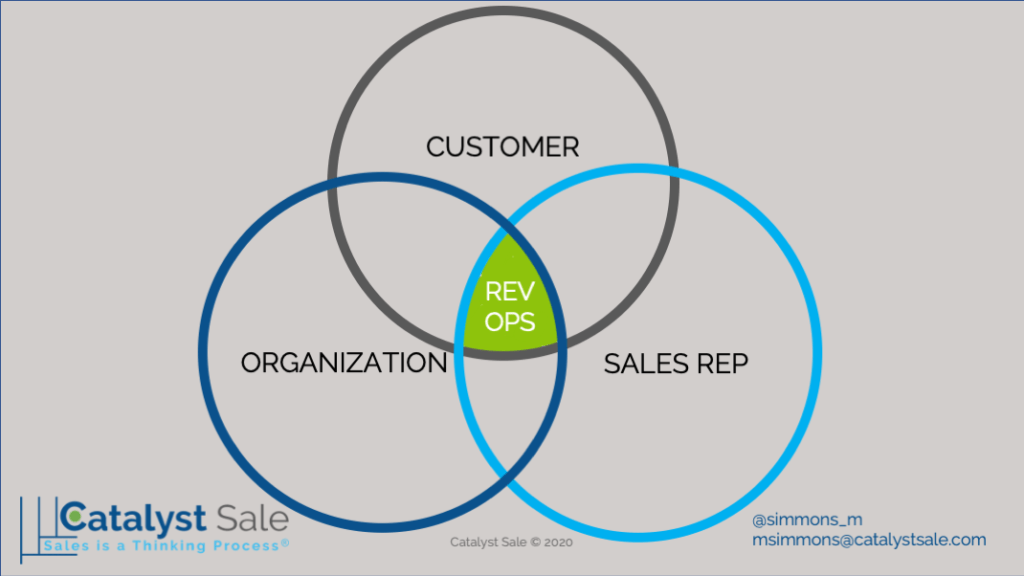
RevOps – the active processes and functions used to generate revenue within a business.

The Customer

There is a lot of talk these days about empathy. There is a lot of talk about designing for and/or aligning to the buyer journey. As Inigo Montoya famously said in the Princess Bride – “You keep using that word. I do not think it means what you think it means.” This is in response to Vizzini’s “INCONCEIVABLE” after one of many attempts to kill the Man in Black.

This is the scene that comes to mind for me when many folks drone on about Buyer Journey & Empathy.

Questions to ask yourself:

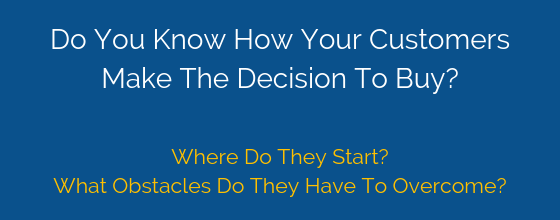
  • Do you know how your customers make the decision to buy?
  • Where do they start?
  • What obstacles do they have to overcome?

I get it – these seem like pretty simple questions – what happens when you start writing the answers down though? Does the scope of your ideal customer expand/creep, or does it get further refined? Do the answers create clarity & focus, or do things get fuzzy?

Your Organization

How does the view change when speaking with marketing, operations, sales, customer success, finance?

Let’s also think about this in the context of the following question.

  • How accurate is your revenue forecast?
  • Where will your business come from in the next 90/180/270/540 Days?
  • Where will you Invest?
  • How will you KNOW when to do so?

The Sales Rep

When assessing RevOps from the Sales Rep perspective, consider the following:

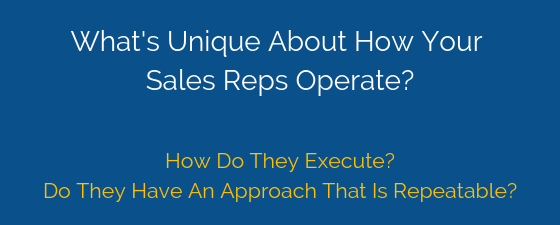
  • What’s unique about how your sales reps operate?
  • How do they execute?
  • Do they have an approach that is repeatable?

Is there another perspective on Revenue Operations?

Of course there are multiple perspectives when thinking about the Revenue Operations problem.

We can look at it from the perspective of the person who is feeling, thinking, doing. The individual. We can also look at this problem through the lens of the business challenge we are attempting to solve.

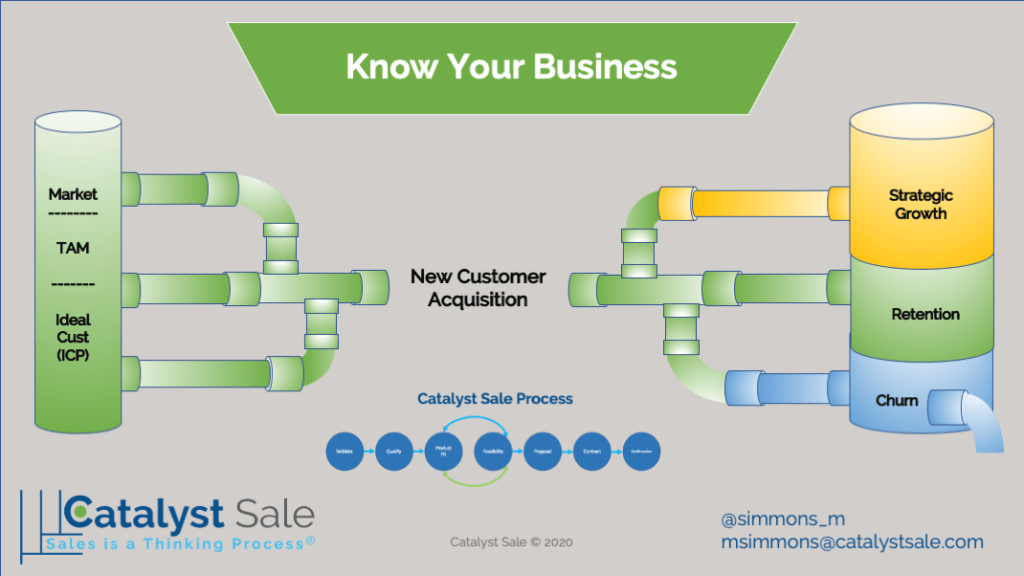
We work with our clients to address these challenges in three buckets. Demand Generation, New Customer Acquisition, and Retention and Growth. If you have been following the blog or the podcast – you’ll be familiar with the following image.
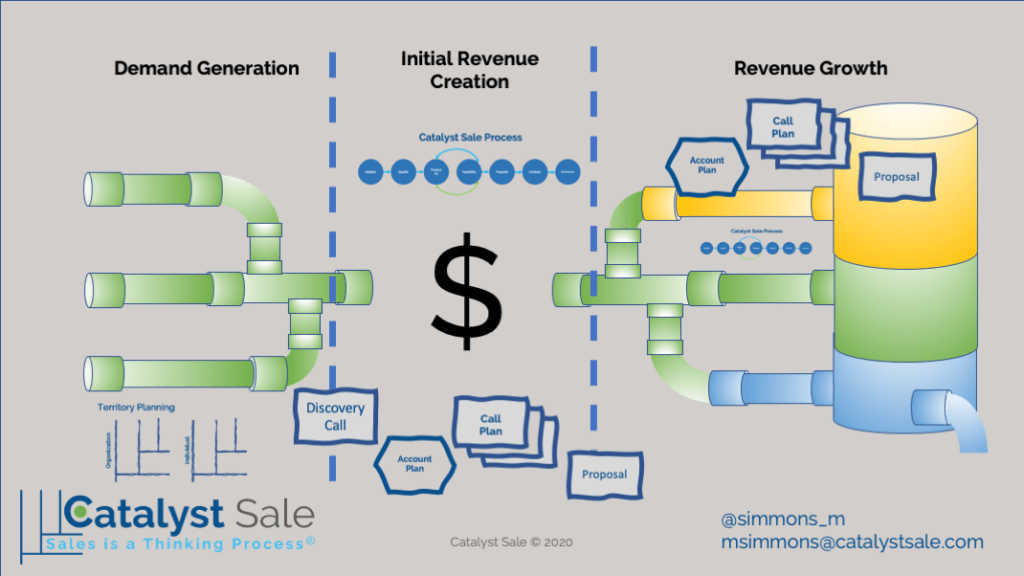
This can be a bit overwhelming. What happens if we remove some of the noise, and focus on one problem – “Initial Revenue Creation” or New Customer Acquisition.

If this is the problem we are solving for, there are a couple of ways we can address the challenge.

For Instance, what if we are solving for Demand Generation?

Let’s say that the issue is specific to pipeline development – meaning you are executing well further down the funnel. We can take a look at the three demand generation pipes.

  • 1:Many – Marketing/Demand Generation (Gen)
  • 1:1 – Sales Rep Outreach/Referral Demand Gen
  • Channel – Demand Gen via Referrals and Partners

Problem Solving Techniques

The above are some examples of how we can isolate for specific variables, and apply problem-solving techniques to complex challenges.

You do not solve complex problems with complex solutions. You solve them with simple solutions. Simple solutions that you can test, repeat, and iterate as necessary.

Some questions that can help you get on the right track when thinking about Problem Solving

  • What Problem Are We Solving For? – Define the problem, identify and clarify the “WHAT”
  • Why Is It Important for US to Solve this problem? – The WHY behind it
  • How have we attempted to solve the problem? – HOW have we attempted to solve, but failed?
  • How might we solve the problem in the future? – HOW can we change our approach, and test new things?

It’s time to think differently about the Revenue Operations problem and take a clinical approach to solve it in your organization.
Where Does Revenue Come From?

Where Does Revenue Come From?

Better yet – where does your revenue come from?

Can you draw it up on a whiteboard?

If everyone in the org drew their version of the model, equation, funnel, etc – would it look the same?

This is a challenge I’ve been working on in one way or another for the past 20 years. Replace revenue with “audience or learners”. We could ask the question – Where do learners come from? Where do end-users come from? Where do our customers (internal or external) come from?

These are my thoughts process and perspectives on this.

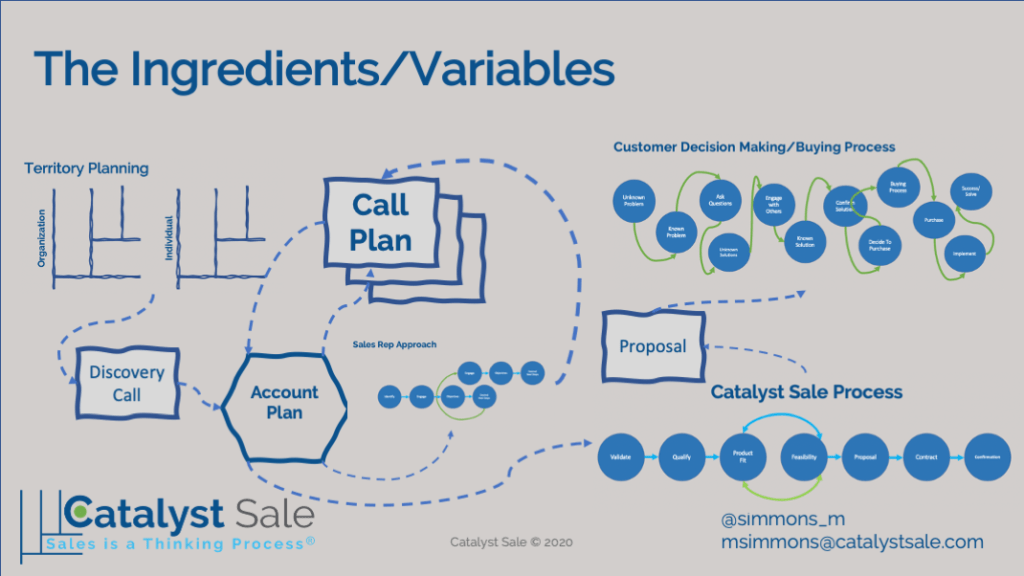
Ingredients in the Revenue Equation

What are the ingredients that make up your revenue equation?

There are a handful from my perspective, and they fall into the following two categories – Tools and Process.

Tools for Revenue Growth

  • Territory Plan – Knowing who your customer is at an individual and organization level are important distinctions. Tools like a Territory Plan, can help create both clarity and focus.
  • Call Plan – Preparing for interaction, knowing who will be in the room, anticipating their objectives, knowing your objectives, and having a list of desired next steps, can put you on the path to success.
  • Account Plan – Knowing the what, who, why, how, and when, followed by creating a plan & executing can help reveal risk, and improve impact.
  • Proposal – Knowing the problem that exists, why it is important to solve, how you solve it, and how much it will cost.

Processes that Create Revenue

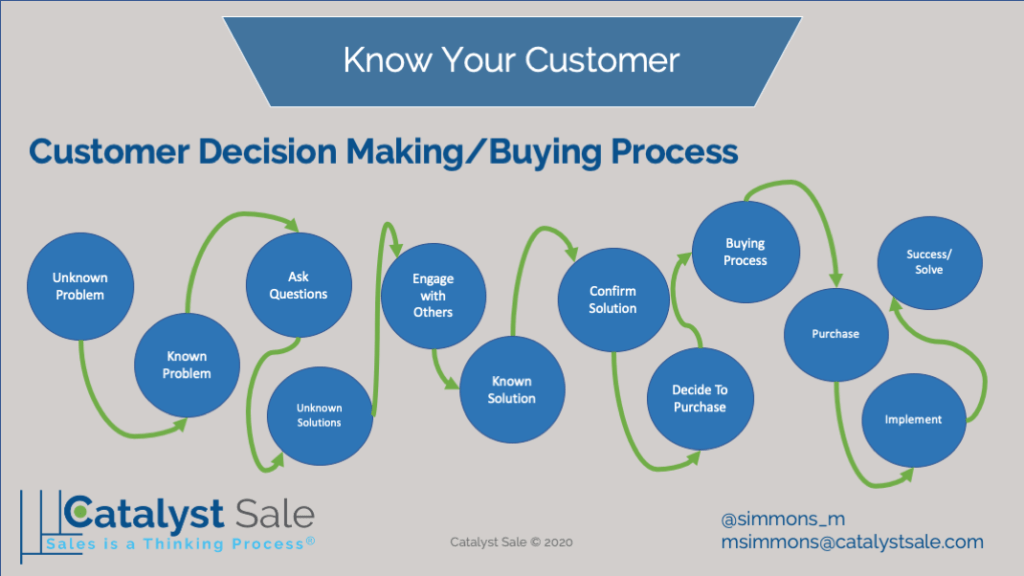
  • Customer Decision-Making Process – How your customer makes the decision to change, and how they purchase.
  • Sales Process – How you forecast and improve predictability while reducing risk.
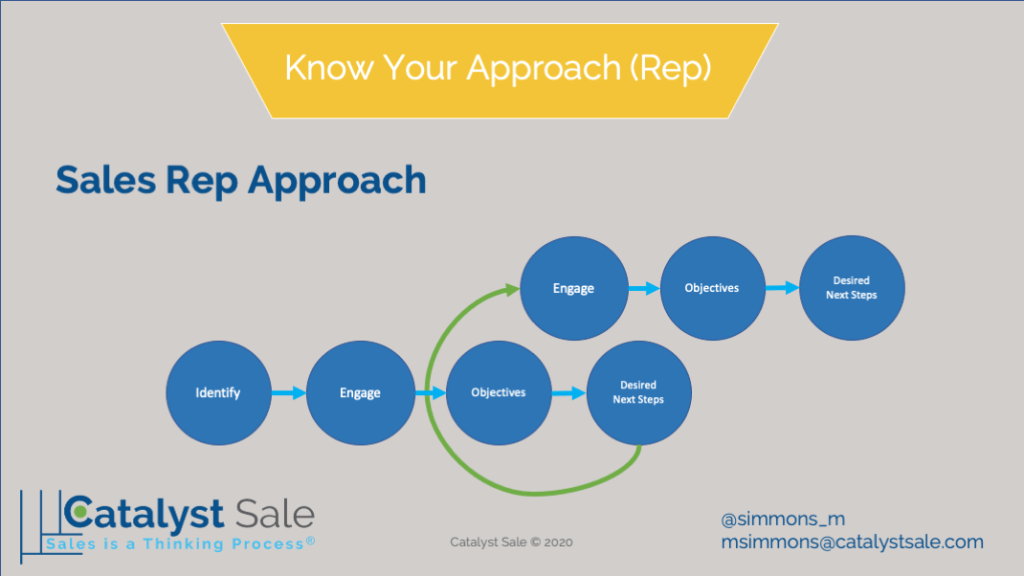
  • Sales Rep Approach – How you execute.

Revenue Operations & Foundational Skills

“If you know the enemy and know yourself, you need not fear the result of a hundred battles. If you know yourself but not the enemy, for every victory gained you will also suffer a defeat. If you know neither the enemy nor yourself, you will succumb in every battle.”

― Sun Tzu

Know Your Customer, Know Your Business, Know Your Approach as a Rep. and apply foundational skills – If you do these things, you will leave fewer things up for chance, and put yourself and your team in a position to be successful.


Know Your Customer

  • How do your customers go through the process of making a decision to purchase, and how do they actually buy things?
  • What series of events, obstacles, barriers, traps do they need to navigate?
  • Where do they go for help?

Know Your Business

  • What is the size and scope of the market you serve?
  • How will you tap into that market?
  • How do you transition from demand generation to conversion, or initial revenue generation?
  • What happens next?
  • How do you grow?
  • What do you lose?
  • Where is the balance?

Know Your Approach

  • How does your team execute?
  • What repeatable process do they follow?
  • How is this different from what you might call your “Sales Process“?

Putting the pieces of the puzzle together

  • Is your ideal customer profile defined?
  • How does it impact your demand generation strategy?
  • Is demand fueling your ability to acquire new customers?
  • Are you growing at a level that excites you?
  • If not – is there a leak in your people, your process, your tools, your approach?

So What?

I get it, many of these questions are tough to answer. They become more complex when you attempt to solve the problem from different perspectives. When problem-solving, it is important to deconstruct things. Isolate for given variables, test, and adjust.

The above visuals should help you deconstruct, and isolate issues. They help me, and organizations I work with.

Now What?

Put this work into practice, gain the perspective of multiple folks within your teams, see where you are aligned, identify your gaps, and address them one at a time.

I’d like to hear how you apply this in your business, in your role. Sales is a Thinking Process® – How are you Thinking Differently About Yours?

If you’d like to learn more about this stuff, or download the tools discussed above – check out the Catalyst Sale Podcast, or send me a note.

Friction in Your Process – Is this Good or Bad?

  • Friction is necessary when you want to create, and build momentum.
  • Friction is less interesting when you want to maintain momentum.
  • Friction is part of the process of change.

Organization Friction

What about organization friction?  How can it be used to create momentum?

Friction is a powerful tool if you want to create change, shift direction, or create movement.  It is required. It is the reason we use cleats on the field, or sharp skates on the ice, tires that have grip. That fine blade though, one that does not have any rough edges, allows you to glide, and build up speed.  

There is a bit of a dichotomy here, a yin and a yang, a balance that we want to achieve.  This is necessary to start the forward progress, increase speed, and build toward results.

What about friction in your Sales Process?

Friction may be necessary in an early sales process, it may ignite the flame, or generate a catalyst to change.  As the process gains momentum though, we want to reduce friction as much as possible to reduce the risk of stalls.

Something that can create friction in your Revenue Operations team, without you realizing it, is a lack of alignment.  This lack of alignment may be driven by blind spots, or role/team specific goals. Marketing looks at the revenue generation problem through one lens.  Operations, considers another lens. While customer success uses yet another. These various views create potential risk, however they can also lead to opportunity.  In your role, you may have created a bias to a specific action, and you may be reinforcing blind spots.

One way to overcome blind spots, is to shift your perspective.  You can do this by calling in other members of the team, bringing in outside resources, or asking questions.  I like to start with a question, sometimes many questions. These questions can, and should provoke thought.

Let’s take a look at some questions specific to Sales Process.

  • What is your definition of Sales Process?
  • How does this definition change depending on who you ask?
  • How would your customer describe the Sales Process?
  • How would your rep describe the Sales Process?
  • How does your organization describe the Sales Process?

I know, that’s a lot of questions, all using similar words, and each shift the perspective a bit.  Let’s start with the definition. The next two definitions are from Webster’s dictionary.

Sales (plural) “a: operations and activities involved in promoting and selling goods or services”

Process (noun): “a series of actions or operations conducing to an end 
especially : a continuous operation or treatment especially in manufacture”

Sales Process – (combined) operations and activities involved in promoting and selling goods or services in a series of actions or operations conducing to an end 

Catalyst Sale Definition – the sales process is a series of stages used to identify progress in a sales cycle.  

The definition above is organization/company specific.  The sales process, as we define it through this lens, is intended to provide an accurate forecast. In order to exit a stage you should be able to answer a single question with a Yes.  If you are unable to answer the question with a Yes, you are not in the next stage of the process and you cannot sit in two stages at once. Progress through stages may be linear, however you may fall back into a previous stage if new information is uncovered.

Let’s say we define the process from the perspective of the customer.  This may be more similar to a decision making process or buying process.  This could be a series of gates that the customer may need to go through to justify a purchase.  It may be a series of gates the customer may need to go through to access or release funds. The decision process and the buying process may be directly related, may operate in parallel, or may be completely disconnected. 

What about the Sales Rep – Do they have their own process?  I certainly hope so. The sales rep should have a predictable, repeatable process that they follow.  This can be rep dependent or it can be managed and adopted across an organization. The objective with the rep process is to advance to the next step or “end”.  That next step may be another call. It may be more information. It may be a demo, or a trial, or something else. The key here is that this repeatable process creates forward momentum that can be measured.  If it cannot be measured or reflected on, it is not a valid process. It is not moving you closer to an end.

Next time you think or talk about  “Sales Process” clarify the lens you are using to describe it.  Are you thinking about this from a rep perspective, organization perspective, or your customer’s perspective?  Does this perspective create the right friction or decrease friction? Is that positive or negative?

Back to Friction 

Friction may be necessary in an early sales process, it may ignite the flame, or generate a catalyst to change.  As the process gains momentum though, we want to reduce friction as much as possible to reduce the risk of stalls. 

Understanding how you define your process, gathering clarity and consistency across the teams that are involved, analyzing data, and reflecting on these processes, can help you create friction where required and reduce it when necessary.

The questions you ask can be the catalyst you are looking for.