



Mike Simmons · Catalyst Book a Clarity Call
Sales is a Thinking Process®

You are struggling with hitting your forecast
do you know why?

Variance is the thing that's making your team play loose or scared - at the wrong time.

Most forecasting problems aren't data problems. They're process problems. Misaligned processes. Inaccurate processes, processes that don't work.

Imagine a scenario where stages are defined by clear exit criteria, past tense and yes or no, you always know exactly where every deal stands. The Catalyst Sale Process solves for that.

A 25-minute look at where your process is actually creating the variance.

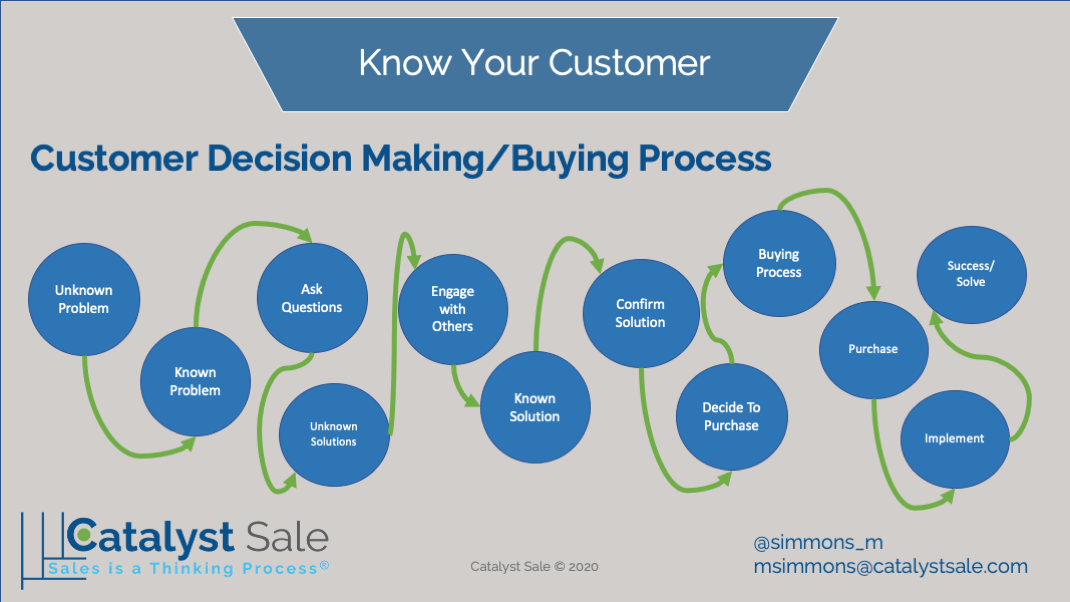
The Buyer Journey / Customer Decision Process
What the customer experiences as they move toward a decision. This is their process, not yours.
The Sales Process
How your team forecasts and tracks opportunities. This is your process, not theirs.
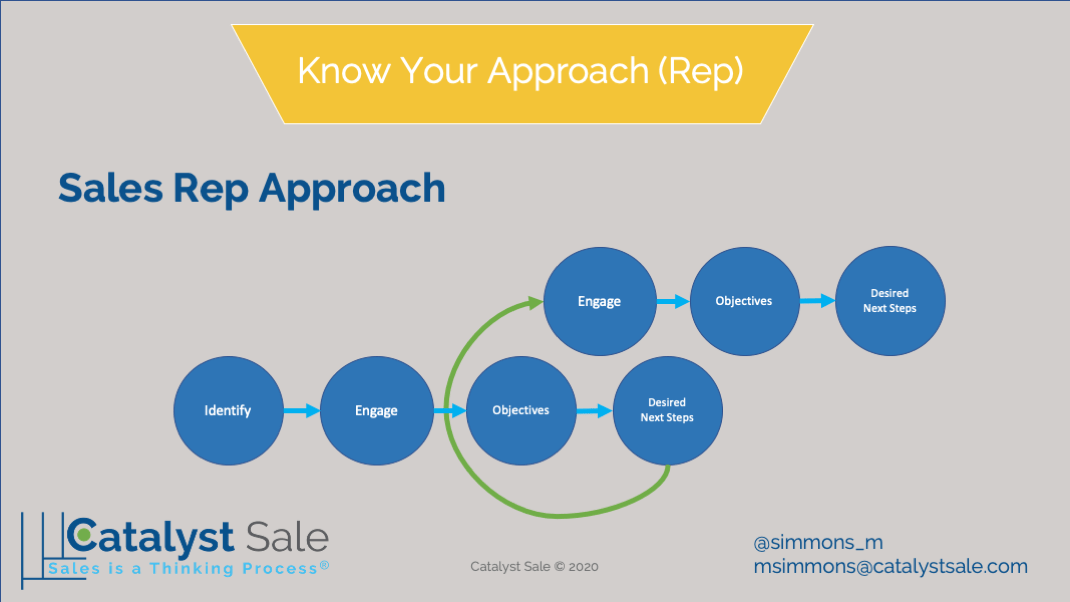
The Sales Rep Approach
How an individual executes their job. Identifying, engaging, clarifying, and closing. The most overlooked of the three.
Stages are past tense
Clear yes/no exit criteria
Solves the forecasting problem
New/Add-On + Renewal versions
The Revenue Plumber

Thought leaders might tell you NEED an architect or an engineer...
...when what you really WANT is a plumber.

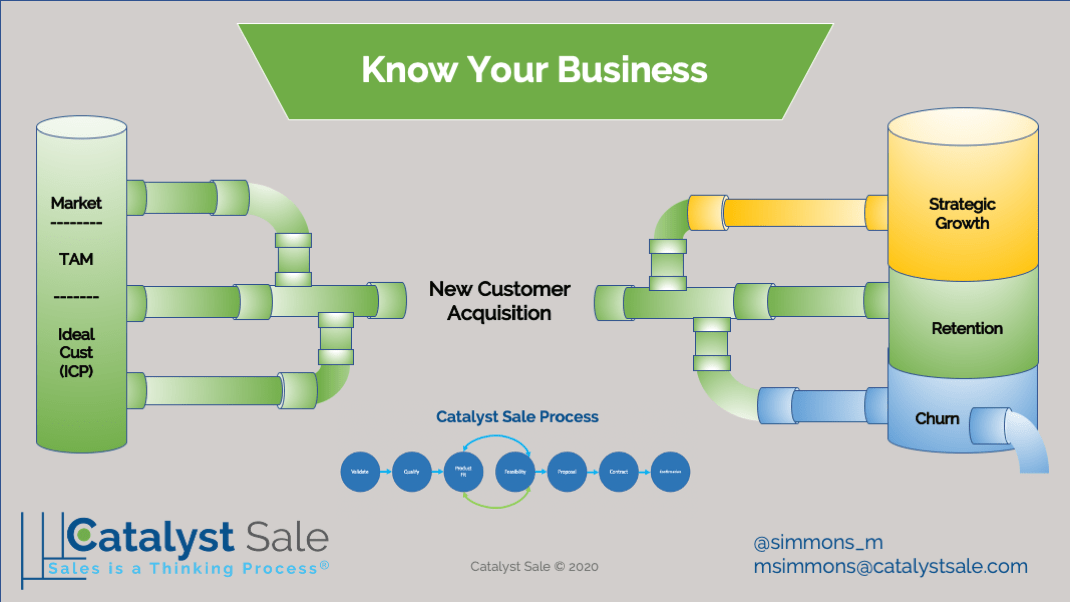
Inside most organizations, there are multiple processes running at the same time, and they're getting mixed up. The buyer journey and the sales process are different pipes. When you force them through the same one, you get neither hot nor cold water. This is a plumbing problem. Not a rebuild.

Think about it in the context of the water flow in your home.

Hot Water — Buyer Journey

What the customer experiences

The buyer's path from awareness to decision. It runs alongside your sales process but through separate pipes. Mixing the two means you never really understand either.

Cold Water — Sales Process

How you forecast with confidence

Your stage-based process for tracking and forecasting opportunities. Past tense stages with yes/no exit criteria mean you always know exactly where every deal stands.

The Rep Approach

How individuals execute the job

Identify, engage, establish objectives, clarify next steps, call to action. The most overlooked process, and the one that determines whether the other two even matter.

"

If inside your business you've tried to run the buyer journey and the sales process through the same pipe, you're creating problems. You may not need a revenue engineer or go-to-market architect. You might just need a plumber to come in, look at your pipes, and tell you where things are getting stuck. — Mike Simmons

Each pipe isn't just a process running alongside the others. It's a system in its own right. A system is people (knowledge/skill), process, and tools, combined. Build with only one or two of the three, and things will start to back up.
Jobs to Be Done

Each process has a distinct
job to be done.

The buyer journey, the sales process, and the rep approach are three separate pipes, and each has a different job. Understanding the difference is what makes forecasting reliable and execution predictable.

Three Systems, Not Processes

Each pipe is its own system.
Skip a part, and it breaks first.

Process, tools, and skill, together. Here's how the three systems split, and the three Catalyst tools that make each one real instead of theoretical.

01 — Customer

Their decision process, their team, their tools

Understood through the account plan framework (what, who, why, how, when, what's next) built from the customer's own words, not yours.

02 — Business

Your sales process, how you execute, your System.

Anchored to sales stages with a job to be done, not hope: past-tense stages, yes/no exit criteria. (Full detail below.)

03 — Rep

The Sales Rep approach

Identify, engage, align on objectives, call to action, repeat. A loop informed by the other two systems, not separate from them. This is how your team executes. This is personal.

Territory Plan
The Book — Business focus
Account Plan
The Chapter — Customer's decision process
Call Plan
The Activity — Rep execution

What changes once the variance is gone.

Before

Pipeline reviews are a debate about optimism. Forecasts miss. Outliers surface after they've already cost you the quarter. The CFO pads every plan and withholds investment, because the number underneath it has never been reliable enough to bet on. The real risk isn't the market. It's the variance nobody's named.

After

Every deal's stage reflects a job that's been done, not hope. Account managers & account executives using the same language. Risk shows up early enough to act on it, and the number you commit is the number you hit. That's what lets the CFO take a calculated risk instead of no risk at all. Hire ahead of demand, guide the board with a number that holds. Demonstrate you have a hand on the wheel.

The Business System, In Full

Seven stages. One clear question
at each exit.

Stages are past tense. You're only in a stage if you can answer Yes to the exit question. If No, go back to the previous stage. That's the Business system, fully built out.

Renewals skip the Validated stage. You start at Qualified, because the relationship already exists. Everything else stays the same: past-tense stages, yes/no exit criteria, and a final confirmation that you delivered what you said you would.
10%
Validated
25%
Qualified
50%
Fit Established
60%
Client Agreed Fit
90%
Proposal Approved
100%
Closed Won
Post-Sale
Success Confirmed
01 10% Validated

This is where we validate whether or not there is a deal to be had. If you are speaking with someone who is in your ideal customer profile at an individual level, and they work within an organization that is within your ICP, there is a high likelihood that within the first discussion you will be able to validate an opportunity. The opportunity is with the company, not the person.

Exit Criteria — Yes/No Question
Can we see a scenario where we will work together?
02 25% Qualified

We build the Account Plan — the problem-solving hexagon, applied to this specific opportunity (what the problem is, who's affected, why it persists, how they're addressing it today, when they need it solved, and what happens next) — and restate their specific problem in their own words, confirming next steps together.

Exit Criteria — Yes/No Question
Can we restate the customer's problem in their own words?
03 50% Fit Established

This is our internal review. Based on our understanding of the problem, can we solve it with our existing solution? This is where we qualify out, either because we cannot solve the problem, or we do not want to customize to solve it. This test validates that we are working with the right customer and that it makes sense to move forward.

Exit Criteria — Yes/No Question
Based on our understanding of the problem, can we solve it with our current solution?
04 60% Client Agreed Fit

Here the customer's perspective is critical. This is their internal review. Do they believe we can solve the problem? Can they afford the solution? Can they implement the technology or service? This is where the customer qualifies out, either they do not believe us, they do not think we can solve it, or they cannot get the deal done.

Exit Criteria — Yes/No Question
Based on our solution, does the customer believe we can solve the problem? Can they purchase?
05 90% Proposal Approved

We have done significant work to get here. We understand the customer and can define the problem from their perspective. We have determined we can solve the problem and they have agreed. Now we list out the Problem, the Solutions, the Costs, and Next Steps in a single document, and confirm approval with our key contacts.

Exit Criteria — Yes/No Question
Has the proposal been approved by the customer?
06 100% Closed Won

We have negotiated terms and conditions and agreed to them. The deal is now moved into Closed Won status. This is not the end of the relationship. It is the beginning of the next phase. The handoff to the success team is critical.

Exit Criteria — Yes/No Question
Is the contract executed?
07 Post-Sale Success Confirmed

30 to 60 days post-sale, we go back to the customer and confirm that we did what we said we would do. We confirm that we delivered the solution and solved the problem. If we haven't, we fix it. Once confirmed, we ask if they know others struggling with the same problem. This is where referrals happen.

Exit Criteria — Yes/No Question
Did we do what we said we would?
What People Say
"

For most of my 19-year sales career, I’ve sought to continuously improve my processes. What many of the methodologies I encountered had in common was that they seemed to add complexity when simplicity is what I sought. Enter the Demystify Sales course. Through this course, what felt like it should be simple, actually became so. Mike makes such sense of what’s necessary to identify gaps in my process, that what I’m learning is immediately actionable and effective. Instead of scripting, Mike introduces an on-point framework that makes gaps evident, prompting me to creatively consider the questions I need to ask to fill them. I strongly recommend this course for every stage of a sales career, from casual contemplation to veteran pro.

DeJuan A. Brown
Director, Solutions Specialist, SLG
Microsoft

The system Mike has put together arms those looking for a tactical approach to building a sales strategy. Regardless of your sales experience, if you invest the time to meaningfully work through this course, you will yield confidence in execution and ultimately close more sales.

Camille Clemons
Executive Director

Mike helped us change our mindset when it comes to sales, what selling is, and how to approach it.

Cassie Tucker
CAMM Media
Who This Is For

This is for you if you're the one
who has to defend the number.

The Sales Leader

Tired of a pipeline review that's really just a debate about optimism.

The Founder

Forecasting revenue off a gut feeling because there's no shared process yet.

The RevOps Lead

Inherited a stage list nobody agrees on the definition of.

The CFO

Can't take a calculated risk on the plan, because the variance sitting underneath the number is what's actually unpredictable, not the market.

Title matters less than whether you've stood in front of a board and defended a number you weren't sure was real. The sales leader has the pain, the board carries the influence, the CFO carries the money at risk. Three seats, one broken number.

The Next Step

Bring one deal you're not sure about. Or bring your current forecast.

In 25 minutes we find out whether the problem is your stages, your reps, or your rep approach, and whether it's worth a deeper look.

Book a Discovery Call →
Also available: the full process, frameworks, tools & coaching are available in the self-paced Demystify Sales course.
"Hope is not a strategy. A shared process is."